Braided Faucet & Toilet Supply Lines | RoughPlumb
Identify flexible supply connectors and common connection/seal points.
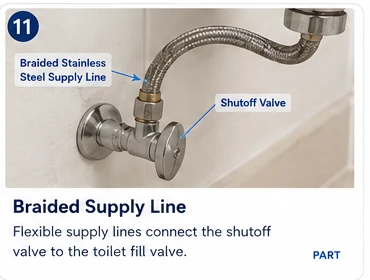
What You’re Looking At
A flexible connector between a shutoff and fixture
Common Problems
- Incorrect identification or assumptions about braided supply line
- A local symptom being mistaken for a whole-system problem
- Alteration before the actual cause or system relationship is understood
How It Works
Braided Supply Line is shown as part of the larger plumbing path so a homeowner can see what connects before and after it. Use the visual to identify the component/system relationship first, then use symptoms and timing to narrow the problem.
Common Symptoms
- Unexpected leakage, noise, odor, slow flow/drainage, poor performance or visible deterioration
- A symptom that changes when a related fixture or valve is operated
Common Causes
- Wear, restriction, poor adjustment, failed sealing, incorrect layout or a downstream/upstream system issue
- A nearby component creating a symptom that appears to come from this part
Common Mistakes
- Replacing parts before confirming the failure path
- Treating a field rule as a universal code requirement
- Ignoring access, finished surfaces or related system components
What the Visual Shows
- Shutoff connection
- Braided hose body
- Fixture connection
- Internal sealing washer/O-ring area
What You Can Check
- Inspect for corrosion, bulging, kinks or active drips
- Dry both ends before testing
- Replace damaged connectors rather than trying to patch the braid
Safety & Scope
Local plumbing codes and manufacturer instructions apply. Shut off water/energy where required and escalate concealed, sewage, structural, gas, electrical or uncontrolled-leak conditions.
When to Call a Plumber
Call a qualified plumber when the issue involves concealed piping, sewage, uncontrolled leakage, structural alteration, water-heater safety devices, uncertain code requirements, or a problem that affects multiple fixtures/system branches.