What Is the Curved Pipe Under My Sink? — P-Trap Explained
The curved pipe under a sink is normally the P-trap. It holds a small amount of water to help block sewer gas and is also a common place for debris, leaks and alignment problems.
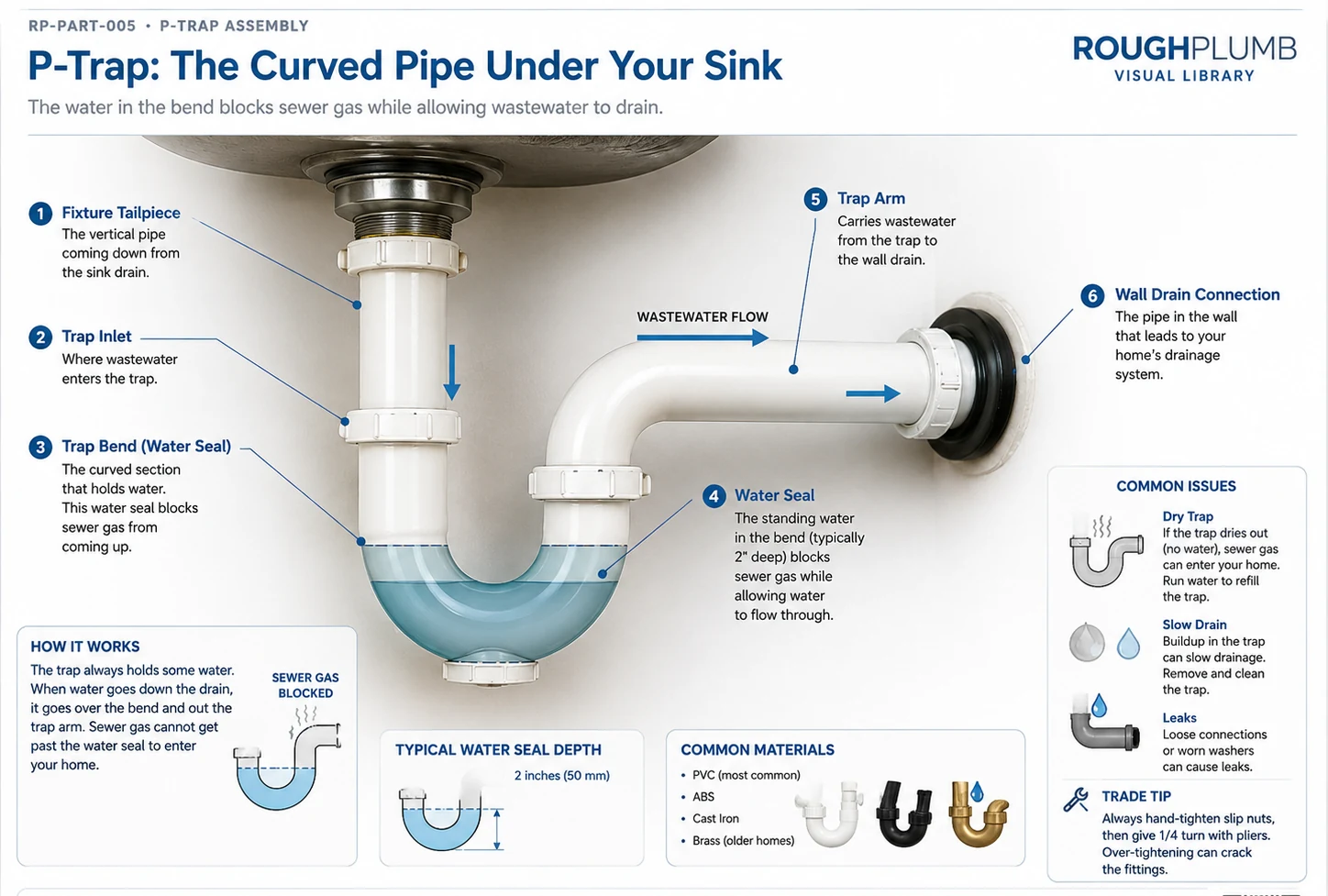
What You’re Looking At
See the curved pipe under a sink, the water seal it holds, the trap arm it connects to, and common P-trap problems.
How It Works
P-Trap is shown as part of the larger plumbing path so a homeowner can see what connects before and after it. Use the visual to identify the component/system relationship first, then use symptoms and timing to narrow the problem.
Common Symptoms
- Unexpected leakage, noise, odor, slow flow/drainage, poor performance or visible deterioration
- A symptom that changes when a related fixture or valve is operated
Common Causes
- Wear, restriction, poor adjustment, failed sealing, incorrect layout or a downstream/upstream system issue
- A nearby component creating a symptom that appears to come from this part
Common Mistakes
- Replacing a part before confirming the failure path
- Changing piping before checking the surrounding system relationship
- Treating a simplified visual as a jurisdiction-specific installation drawing
What the Visual Shows
- Fixture-side inlet
- Curved trap bend
- Standing water that forms the trap seal
- Outlet leading into the trap arm
What You Can Check
- Look for water remaining in the trap after use
- Check visible joints for drips
- If sewer odor is present, consider whether the trap is dry or compromised before assuming a vent failure
Safety & Scope
Local plumbing codes and manufacturer instructions apply. Shut off water/energy where required and escalate concealed, sewage, structural, gas, electrical or uncontrolled-leak conditions.
When to Call a Plumber
Call a qualified plumber when the problem involves concealed piping, sewage, uncontrolled leakage, structural work, water-heater safety devices, uncertain code requirements, or multiple fixtures/system branches.