Inside a Toilet Tank — Parts and How They Work
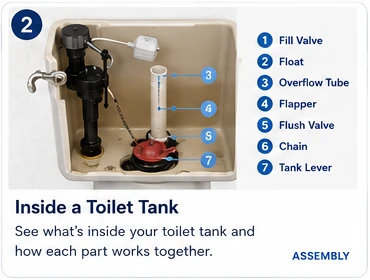
A toilet tank uses a small group of parts to refill the tank, hold the water and release it during a flush. This visual shows how the main pieces relate to one another.
What You’re Looking At
Identify the fill valve, float, overflow, flapper, flush valve, lever and chain.
How It Works
Inside a Toilet Tank is shown as part of the larger plumbing path so a homeowner can see what connects before and after it. Use the visual to identify the component/system relationship first, then use symptoms and timing to narrow the problem.
Common Symptoms
- Unexpected leakage, noise, odor, slow flow/drainage, poor performance or visible deterioration
- A symptom that changes when a related fixture or valve is operated
Common Causes
- Wear, restriction, poor adjustment, failed sealing, incorrect layout or a downstream/upstream system issue
- A nearby component creating a symptom that appears to come from this part
Common Mistakes
- Replacing a part before confirming the failure path
- Changing piping before checking the surrounding system relationship
- Treating a simplified visual as a jurisdiction-specific installation drawing
What the Visual Shows
- Fill valve refills the tank
- Float tells the fill valve when to shut off
- Overflow tube provides an overflow path and commonly receives refill flow
- Flapper opens the flush-valve path to the bowl
- Lever and chain lift the flapper
What You Can Check
- Identify each part before adjusting anything
- Watch the water level rise and the fill valve shut off
- Confirm the refill tube is routed as intended for the toilet design
Safety & Scope
Local plumbing codes and manufacturer instructions apply. Shut off water/energy where required and escalate concealed, sewage, structural, gas, electrical or uncontrolled-leak conditions.
When to Call a Plumber
Call a qualified plumber when the problem involves concealed piping, sewage, uncontrolled leakage, structural work, water-heater safety devices, uncertain code requirements, or multiple fixtures/system branches.