Washer Standpipe & P-Trap Explained | RoughPlumb
A washing machine pumps a large volume of water into its standpipe quickly. The standpipe, P-trap, trap arm and downstream branch all matter when water rises, overflows, gurgles or smells.
COMMON SYSTEM + FIELD-PLANNING CONCEPT — exact standpipe, trap, vent and branch requirements depend on jurisdiction and installation.
What happens during the washer pump-out?
A washer releases a relatively large flow quickly. Watch the timing without repeatedly flooding the area.
Washer suds zone: washer discharge can carry water, air, detergent and suds rapidly into the drainage system. Nearby connections can sometimes be affected when the system lacks sufficient separation or capacity. This is a field-planning concept, not a universal dimension or code rule; exact requirements are jurisdiction and installation dependent.
What You’re Looking At
Washer discharge from appliance to standpipe, trap, trap arm and vented drainage
Common Problems
- Incorrect identification or assumptions about washer standpipe & p-trap
- A local symptom being mistaken for a whole-system problem
- Alteration before the actual cause or system relationship is understood
How It Works
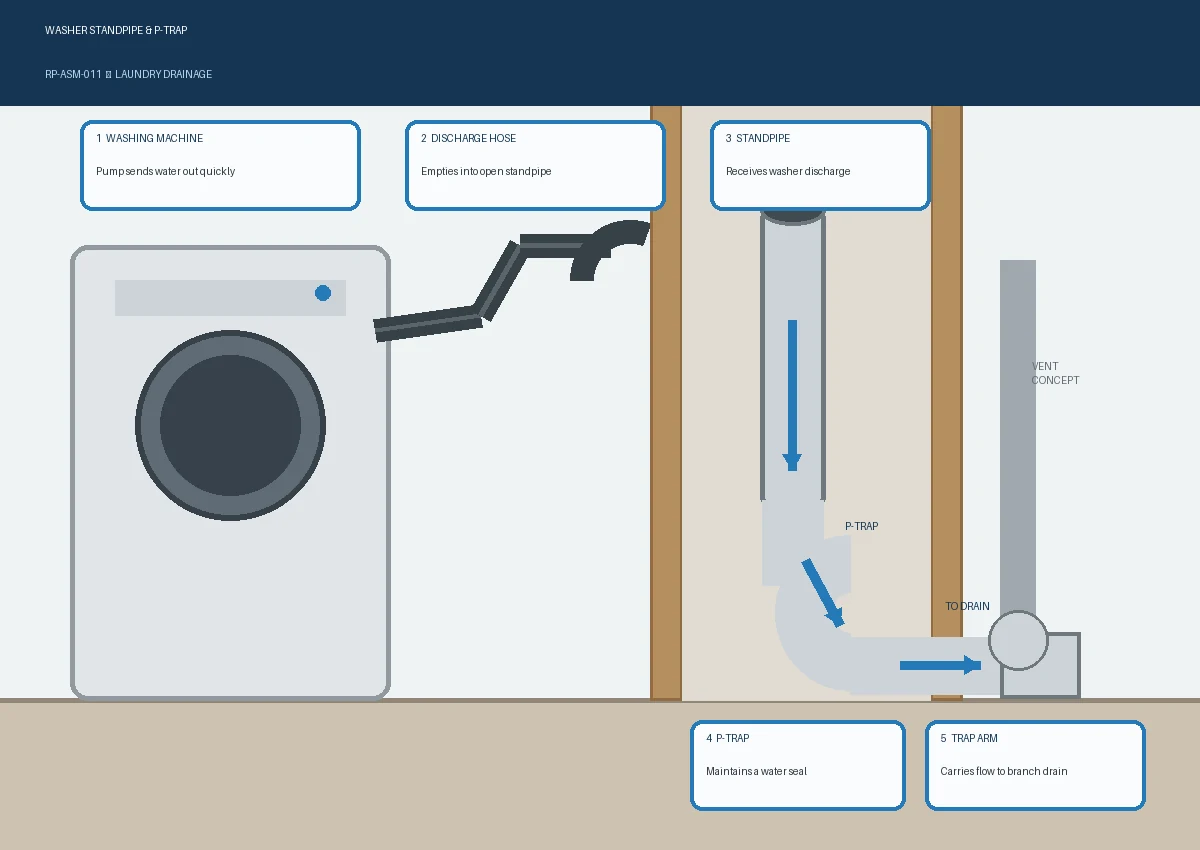
The washing machine pumps water through its discharge hose into an open standpipe. Water then passes through the P-trap and trap arm into the drainage system. The trap retains a water seal after discharge.
Common Symptoms
- Standpipe water rises or spills during pump-out
- Washer drains for a while before backing up
- Nearby fixtures gurgle during washer discharge
- Sewer-like odor near the standpipe
Common Causes
- Restriction in the standpipe, trap or nearby branch
- Restriction farther downstream or a shared drainage problem
- Drainage/venting interaction that needs broader investigation
- Trap-seal or drainage-arrangement issue
Common Mistakes
- Replacing parts before confirming the failure path
- Treating a field rule as a universal code requirement
- Ignoring access, finished surfaces or related system components
What the Visual Shows
- 1 — Washer discharge hose
- 2 — Open standpipe
- 3 — P-trap
- 4 — Trap arm
- 5 — Drain/vent connection
What You Can Check
- Confirm the hose is secured without sealing the standpipe airtight
- Watch a discharge cycle for rising water
- If the standpipe overflows, stop repeated testing
- Check whether nearby fixtures also react
Safety & Scope
Local plumbing codes and manufacturer instructions apply. Shut off water/energy where required and escalate concealed, sewage, structural, gas, electrical or uncontrolled-leak conditions.
When to Call a Plumber
Call a qualified plumber when the issue involves concealed piping, sewage, uncontrolled leakage, structural alteration, water-heater safety devices, uncertain code requirements, or a problem that affects multiple fixtures/system branches.