Where Is the Bathtub P-Trap? | RoughPlumb
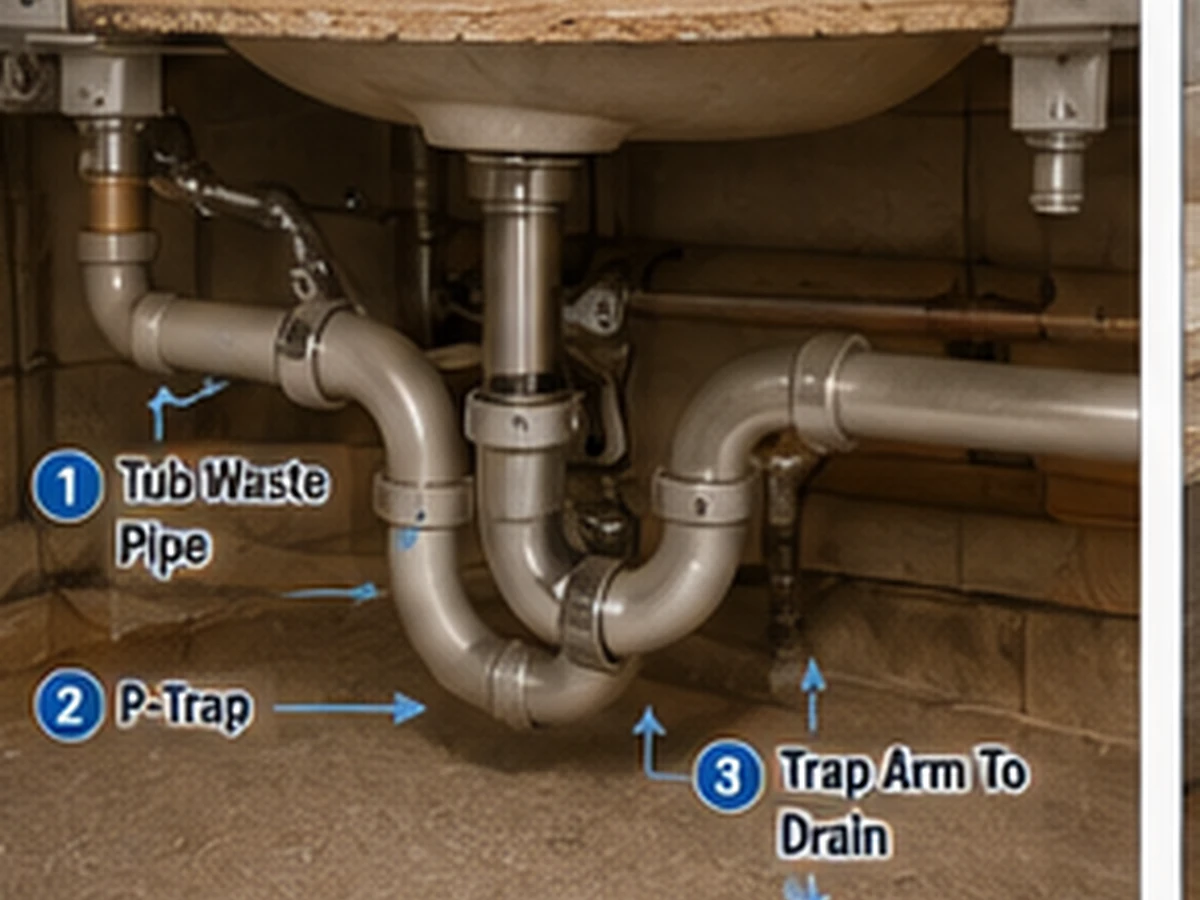
Understand why the tub trap is usually concealed below the fixture.
What You’re Looking At
Understand why the tub trap is usually concealed below the fixture.
How It Works
Bathtub P-Trap is shown as part of the larger plumbing path so a homeowner can see what connects before and after it. Use the visual to identify the component/system relationship first, then use symptoms and timing to narrow the problem.
Common Symptoms
- Unexpected leakage, noise, odor, slow flow/drainage, poor performance or visible deterioration
- A symptom that changes when a related fixture or valve is operated
Common Causes
- Wear, restriction, poor adjustment, failed sealing, incorrect layout or a downstream/upstream system issue
- A nearby component creating a symptom that appears to come from this part
Common Mistakes
- Replacing a part before confirming the failure path
- Changing piping before checking the surrounding system relationship
- Treating a simplified visual as a jurisdiction-specific installation drawing
What the Visual Shows
- Tub drain above floor
- Concealed trap below the tub
- Trap arm leaving the trap
- Floor framing around the assembly
What You Can Check
- Use access below when available
- Do not cut flooring blindly to find the trap
- Consider joist direction before planning a moved drain
Safety & Scope
Local plumbing codes and manufacturer instructions apply. Shut off water/energy where required and escalate concealed, sewage, structural, gas, electrical or uncontrolled-leak conditions.
When to Call a Plumber
Call a qualified plumber when the problem involves concealed piping, sewage, uncontrolled leakage, structural work, water-heater safety devices, uncertain code requirements, or multiple fixtures/system branches.